Munich Marathon: 7 Incredible Lessons from My Race
The Munich Marathon gave me a running tour of Bavaria’s capital, a memorable finish in the Olympic Stadium, and an unexpected lesson about choosing what to listen to before a race.
I remember the landmarks, the autumn sunshine and the satisfaction of finishing in my planned time. But I also remember a runner near the start whose running commentary was almost a marathon in itself.
This Munich Marathon experience taught me something about more than running. It reminded me how important mental preparation, pacing and managing distractions can be on race day.
This is my personal experience of the course and arrangements when I ran it. If you are planning to take part in an upcoming edition, check the organiser’s latest information about the route, start and finish.
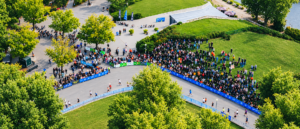
Before the Munich Marathon Start
The morning began cool and damp after rain the night before. Later, the sun came out, and the conditions became far more pleasant.
Getting to the starting area took time. Reaching the Olympic grounds was only part of the journey; there was still a fair amount of walking before I reached my starting block.
That is something I remember whenever I plan a race morning. Arriving nearby and being ready to start are two different things.
Around me, runners were checking watches, adjusting clothing and trying to settle their nerves.
One group was dealing with the anticipation by talking. Or, more accurately, one particularly enthusiastic member was talking while the others listened.
Unfortunately, so was I.
A Running Commentary I Had Not Requested
The lady had a powerful voice and an extensive collection of marathon horror stories.
Injuries. Nausea. Exhaustion. The dreaded “man with the hammer”.
Her less experienced companion was receiving a thorough introduction to everything that might go wrong during a marathon.
I could have looked away, but that would not have helped my ears. We were standing close together, and there was nowhere convenient to go.
I was near the 3:30 pacer and had already decided how I wanted to run. Accelerating simply to escape a conversation was not part of my plan.
When the starting gun finally went off, I hoped the commentary would stop.
It did not.
Now we were discussing the aid stations.
Running Through Munich’s Streets
The opening kilometres were busy, and finding a comfortable rhythm took patience.
When the Munich Marathon course opened onto Leopoldstraße, I began enjoying the surroundings. The broad street and the view towards the Siegestor gave the race a real sense of occasion.
This was one of the pleasures of running through Munich. Familiar sights appeared from a different perspective when the road belonged to runners.
Some people stopped for photographs. I understood the temptation, although I was trying to stay with my planned effort.
There was plenty to notice in the buildings and streets around us. It helped draw my attention back to the city rather than the conversation nearby.
Running Through the English Garden
The English Garden was one of my favourite stretches of the Munich Marathon.
Sunlight came through the trees, music carried towards us, and the surroundings felt a world away from the bustle of the start.
For a while, the running seemed straightforward: follow the route, keep the effort steady and enjoy being there.
Occasionally, another instalment of the marathon horror stories reached me.
I remember wondering how anyone could have so much to say while running. I was quite occupied with the running part.
Eventually, we became separated, and it grew quieter around me. I could finally settle into my own race.
The Quieter Middle Kilometres
Every city marathon has stretches that are less scenic than the photographs suggest.
Munich was no exception.
After the park and the earlier landmarks, some sections felt more ordinary. There were fewer distractions, and the task became maintaining a sensible effort rather than looking around.
Those kilometres matter. It is easy to run enthusiastically when the scenery is beautiful and the crowd is loud. A quieter road asks you to find your own rhythm.
I concentrated on the section ahead, checked how I was feeling and kept moving.
By the halfway point, the improving weather had lifted my spirits. There was still plenty of work to do, but the race was progressing.
Back Towards Munich’s Landmarks
Later, the course brought us towards more of central Munich’s sights.
I remember passing cultural buildings, approaching Sendlinger Tor and reaching the area around Marienplatz. The Frauenkirche was another memorable landmark.
For a visiting runner, those moments made the Munich Marathon special. I was seeing the city while doing something I enjoyed, with the atmosphere of an event around me.
Of course, by then my legs were becoming less interested in architecture.
That is the agreement you make with a marathon. The sightseeing continues, but eventually you have to work quite hard to appreciate it.
The Olympic Grounds Were Not the Finish Line
Approaching the Olympic grounds gave me a welcome lift.
It also required patience.
Being back in the park did not mean the race was finished. There was still running to do before entering the stadium, followed by the final stretch around the track.
I had imagined fuller stands, so the stadium was quieter than I had pictured. Still, there was applause, I heard my name over the loudspeakers, and I crossed the line having achieved my planned time.
That was enough.
I was a happy, tired runner.
Then came a challenge I had not spent much time rehearsing: the stairs out of the stadium.
After a marathon, a flight of steps deserves considerably more respect than it receives before one.
An Unexpected Encounter After the Finish
While recovering near the finish, I heard the familiar voice again.
The runner from the start was approaching, and she appeared to be struggling. After finishing, she received medical assistance and was taken away on a stretcher.
I do not know what caused her difficulties. It would be unfair to assume that her earlier conversation explained what happened.
What stayed with me was how much of that conversation I could still remember.
I had spent part of my own race listening to someone else’s fears. That was the lesson I could reasonably take from the experience: be more deliberate about where I place my attention.
What the Munich Marathon Taught Me About Mental Preparation
A marathon deserves practical preparation. Thinking about possible difficulties can be useful when it leads to a plan.
I find it helpful to distinguish between preparing for a problem and repeatedly imagining a disaster.
Preparing means deciding how I will respond if the opening kilometres are crowded, if my pace feels too ambitious or if I need to adjust my expectations.
During a race, I try to return to questions I can use:
-
- Is this effort manageable?
-
- Am I following my plan?
-
- What needs my attention now?
-
- What is the next sensible decision?
Mental rehearsal helps me practise those responses before race day.
It does not guarantee a finishing time or prevent physical problems. Instead, it gives me something constructive to return to when nerves, distractions or fatigue make clear thinking harder.
These are lessons I can carry into future races, whether I am running through Munich or somewhere entirely different.
What I Remember Most About the Munich Marathon
My Munich Marathon memories include the English Garden in autumn sunshine, the city landmarks, the Olympic Stadium and the satisfaction of reaching my target.
They also include that remarkably persistent voice.
You cannot choose everything you hear around a starting line. But you can practise bringing your attention back to your own preparation, your own effort and the decisions ahead.
For me, that is one of the most useful lessons from this Munich Marathon experience: prepare for challenges, keep your pacing sensible and focus on what you can control.
And if your finish involves stadium stairs, save a little patience for those too.
For more running stories and thoughts on mental training, visit heikostribl.com.
Take it easy. God bless you.