Swimrun Stories, Part 3
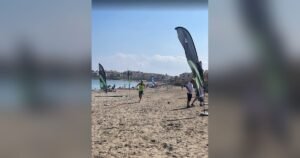
ÖTILLÖ La Manga is a race I remember for two things: the water and the people. Some races you remember for the course. Some you remember for the friends you make. La Manga, on the coast of southern Spain, gave me both.
ÖTILLÖ La Manga: a strip of land between two seas
La Manga is a long, narrow strip of land with the calm, shallow Mar Menor on one side and the open Mediterranean on the other. For a swimrun, that’s a gift: in one race, you get two completely different kinds of water.
On one side, water as flat as a swimming pool. On the other, waves that push you off course with every breath.
Same race, same stroke? No.
Runners often learn to swim in a pool and assume the same stroke works everywhere. It doesn’t. In flat water, a long, relaxed stroke carries you far. In waves, that same stroke gets broken up, your timing goes, and you start swallowing water.
The best open-water swimmers don’t swim harder when it gets rough. They adapt. A slightly shorter, quicker stroke. Breathing to the side away from the waves. Lifting the eyes briefly to sight the next buoy, then putting the head straight back down.
This is a big part of the book From Runner to Efficient Swimmer: A Practical Guide to Calm, Correct and Sustainable Front Crawl: technique isn’t one fixed movement. It’s a skill you adjust to the water you’re in, the same way you adjust your stride on a trail.
How to swim in flat water and in waves
- Flat water: long body, long stroke, calm rhythm. Let the glide do the work.
- Waves: shorten the stroke slightly and increase the rhythm. Keep moving forward instead of fighting each wave.
- Breathing: breathe to the side away from the chop. If you can breathe to both sides, now is the time to use it.
- Sighting: eyes up briefly, find the buoy, head down again. Every second with a high head sinks your legs.
Meeting Bernardo
ÖTILLÖ La Manga is also where I met Bernardo, a really strong athlete and swim coach. We got talking, and somewhere between the swims and the runs, a friendship started.
There’s something special about meeting people at these races. Nobody cares about your job title or your finishing time. You’re all wet, tired and covered in salt, and you share the same course and the same suffering. Some of the best friendships I have started exactly like that, as I also wrote in Running Through Countries.
And spending time with a coach like Bernardo is a reminder of how much there is to learn in the water, at every level. Strong swimmers aren’t strong because they fight the water. They’re strong because they work with it.
What I took away from ÖTILLÖ La Manga
- Open water is never the same twice. Adapt your stroke to the conditions.
- In waves, shorten your stroke and breathe away from the chop.
- Sight briefly, then get your head back down. A high head sinks your legs.
- Go to races for the course, and come back with friends.
There’s a catch in everything in this article about adapting. You can only adapt a stroke you already own. Shortening your stroke in the waves, breathing away from the chop, sighting and putting your head straight back down: all of that only works when the basics run on their own, without you having to think about them. If you’re still fighting for balance or air, there’s no room left in your head for the waves. Bernardo can adapt to any water because his stroke is automatic, built over years in the right order. For runners, the good news is that you don’t need years. You need a proven process that builds the stroke step by step, foundation first, until your subconscious takes over the basics and frees your mind for the conditions. That’s the path in the book From Runner to Efficient Swimmer: A Practical Guide to Calm, Correct and Sustainable Front Crawl: first a stroke you own, then a stroke you can adapt. Not the other way around.
Missed the first parts? Read Part 1: Malta and Part 2: Engadin.
Next in the series: Lake Constance, a crossing in one of the hottest races ever, and the core lesson of the whole book.
Take it easy, and God bless.
— Heiko